
Expanding Access to Orthopedic Care in the Mat-Su Valley
Dogs have an ACL just like people, however we call in a cranial cruciate ligament or CCL. Dogs tend to tear it in stages, snapping a few fibers at a time like a rope swinging back and forth across a knife blade. Dogs will tend to have waxing and waning symptoms for long periods, as the joint stability deteriorates. The injury can be painful, limiting, and frustrating for both pets and their owners. Many dogs with this type of injury limp, struggle to bear weight, or have difficulty returning to normal activity without surgical support. This injury is especially common in larger, active dogs, though every patient is different.
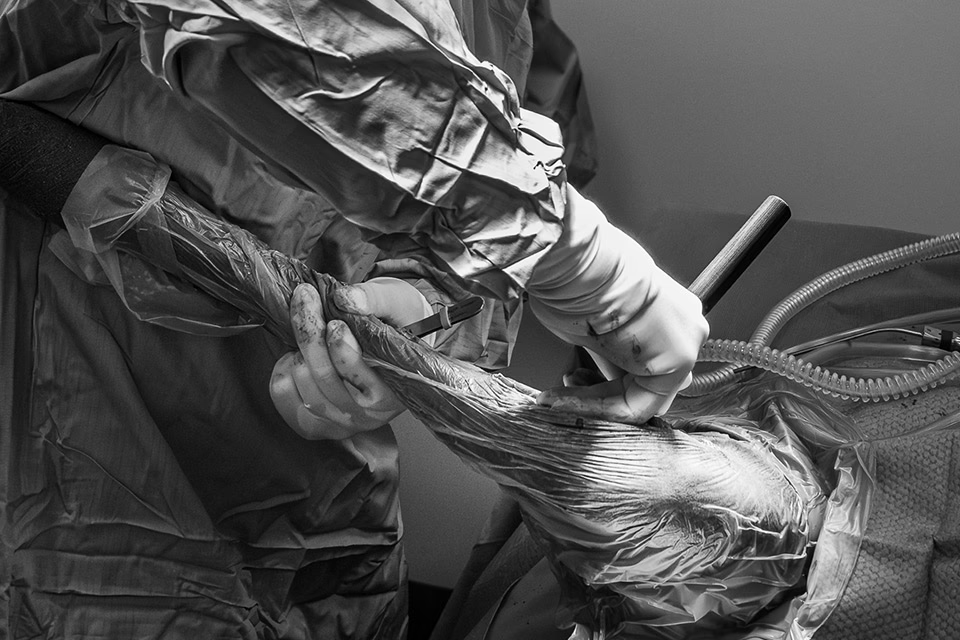
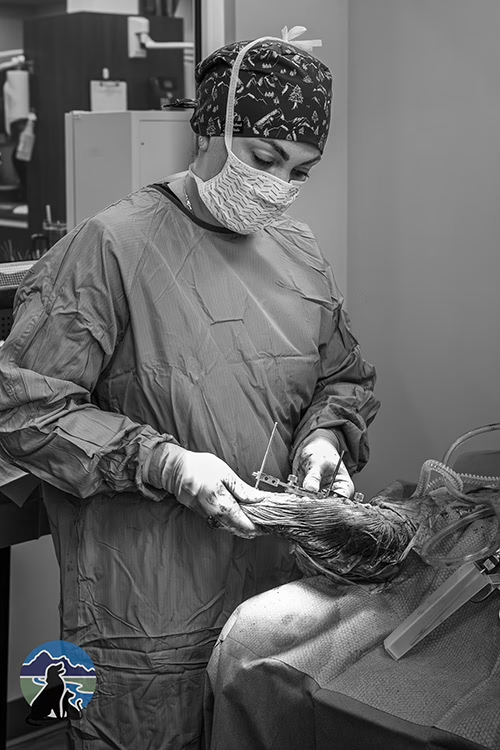
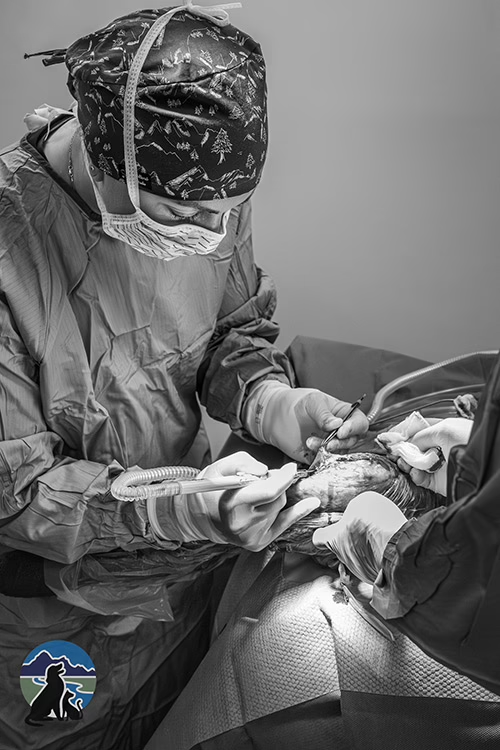
One of the most common surgical options for this injury is called a tibial plateau leveling osteotomy, or TPLO. At Susitna Animal Urgent Care, Dr. Paige Wallace has pursued additional training to offer this advanced orthopedic procedure to dogs in our community.
For Dr. Wallace, offering TPLO surgery is more than simply adding another service. It is about helping address a real need for pets and families across the Mat-Su Valley.
What Is Tibial Plateau Leveling Osteotomy (TPLO) Surgery?
Tibial plateau leveling osteotomy, commonly called TPLO, is a procedure used to help stabilize the knee after a cranial cruciate ligament injury. During a TPLO procedure, the angle of the tibial plateau, which is the top portion of the shin bone, is changed to help reduce instability in the knee. The goal is to improve comfort, support better mobility, and help the dog return to more normal function over time.
A veterinarian can evaluate your dog’s injury, size, age, activity level, and overall health to determine whether TPLO or another treatment option may be appropriate.
Why This Procedure Matters Locally
Orthopedic surgery is not always easy to access, especially in areas like Alaska where referral options are limited or booked far in advance. Dr. Wallace has seen this challenge firsthand.
“This is generally a surgery that’s only done by boarded surgeons,” Dr. Wallace said. “But we just don’t have enough referral options up here.”
For many families, that can mean long waits, significant travel, and higher costs while their dog remains painful and limited. That reality is part of what motivated Dr. Wallace to pursue additional training. “It’s one that I’ve always referred,” she said. “But we just don’t have enough referral options up here.”
When access is limited, families can feel stuck between waiting for a specialist appointment and watching their dog continue to struggle. By adding TPLO surgery to the services available at Susitna Animal Urgent Care, Dr. Wallace hopes to help make orthopedic care more accessible for local pets. “So I went and got trained how to do it,” she said.
A Personal Passion for Orthopedic Surgery
For Dr. Wallace, surgery has always been an area of deep interest.
“Orthopedics or surgery is something I always wanted to do,” she said. “Being able to get extra training and offer it to the community in a way that makes it more accessible is also awesome for me.”
That combination of clinical skill, ongoing training, and a desire to serve the local community is part of what makes this service special. TPLO surgery gives Susitna Animal Urgent Care another way to support pets who need more than urgent care stabilization, while still staying connected to the needs of local families and referring veterinary clinics.
It also reflects one of the larger goals of Susitna Animal Urgent Care: to support the veterinary community, not replace it. When a pet needs timely care and a regular veterinarian or referral option is not immediately available, Susitna can help bridge the gap.
Meet Oskar: Back to Doing What He Was Born to Do
Oskar is an 8½-year-old Deutsch Drahthaar, a German hunting breed built for long days in the field and the water. When he started limping and seemed sore, his owner Mike figured it was just age catching up with him.
It wasn’t. After doing some research, Mike learned about cruciate ligament injuries and TPLO surgery. Then came the big question: who should do the surgery on his best friend?
“Thankfully I went with Dr. Paige Wallace of Susitna Animal Urgent Care. Dr. Wallace is very professional and compassionate. Above all she was confident that Oskar could get back to doing what he was born to do! Dr. Wallace and the whole staff at Susitna Animal Urgent Care were the finest kind! Oskar and I thank them from the bottom of our hearts!” (Mike Halloran, Oskar’s owner)
Today, Oskar is swimming every day as part of his recovery, and Mike is still taking it slow. The goal? A four-month trip hunting across the West, starting in the Dakotas this October. In Mike’s words, by then Oskar should be “ready to rock.”
What Pet Owners Should Know About Recovery
Surgery is only one part of the treatment process. Recovery at home also plays a major role.
After orthopedic surgery, dogs typically need a period of strict activity restriction. That can be hard for owners, especially when their dog starts to feel better before the bone and soft tissues have fully healed.
Dr. Wallace describes this as one of the hardest parts for families.
“The small part is my contribution,” she said. “The hardest part is on the owner.”
Oskar’s owner knows this well. Even with his dog feeling better and a hunting trip on the calendar, Mike is sticking with controlled exercise like swimming and taking it one step at a time.
Rest, leash walks, and controlled activity are essential after surgery. Your veterinary team will give you specific instructions based on your dog’s procedure, progress, and follow-up exams. Limiting a dog’s movement can be tough, but those restrictions protect the repair and give your pet the best chance at a strong recovery.
Signs Your Dog May Have a Knee Injury
A cranial cruciate ligament injury can look different from dog to dog. Some pets suddenly stop using a back leg, while others develop a gradual limp that gets worse over time.
These signs are easy to mistake for normal aging. Oskar’s owner thought his dog was just getting old. If an older dog is limping or slowing down, it’s worth having that knee checked.
Common signs include:
- Limping on a back leg
- Difficulty rising or jumping
- Sitting with one leg extended awkwardly
- Stiffness after activity
- Swelling around the knee
- Sudden pain after running or playing
- Reluctance to bear weight
If your dog is limping, painful, or not using a leg normally, it is important to have them evaluated. Early diagnosis can help your veterinarian discuss the best options for pain control, stabilization, and long-term mobility.
Advanced Surgical Care Close to Home
Tibial plateau leveling osteotomy surgery is a meaningful addition to the services available at Susitna Animal Urgent Care because it helps meet a real need in the region. For dogs with cranial cruciate ligament injuries, timely orthopedic care can make a major difference in comfort, mobility, and quality of life.
Dr. Wallace’s goal is simple: to help make this level of care more accessible to pets and families in the Mat-Su Valley.
If your dog is limping, painful, or has been diagnosed with a cranial cruciate ligament injury, our team can help you understand the next steps and whether a surgical consultation may be appropriate. Contact Susitna Animal Urgent Care to learn more about TPLO surgery and orthopedic care for dogs.